Lockdown Dreams
It was January of 2021, and Israel was in the middle of its third Covid-19 lockdown.
Back in December, we watched it coming in slow motion, now familiar with the pattern:
First, the rumors of a shutdown and news of elevated infection numbers. Politicians and health officials and government departments yelling at each other in the news.
Then, mask regulations and green passports tightened. Promises that they’re doing everything they can to avoid another full lockdown.
And then they started to cancel flights. And, finally, the airport closed.
And that was when they officially announced the start of the first second third lockdown.
And this one hurt, too.
Ido and I had been in the middle of finalizing details for our overseas wedding in Seychelles (since we can’t legally get married in Israel).
For the past year of travel restrictions and lockdowns, we’d been desperately looking for a way, a window, a loophole to pull this off (for example, we seriously explored the option of getting married on a boat in international waters at one point).
Then in November – a glimmer of hope. We heard that Seychelles – a tiny island country off the east coast of Africa – had an easy marriage process compatible with Israel, and no need for quarantine.
We tried to get the pile of paperwork assembled in time. We really did. But as fast as that between-lockdowns window opened, it slammed shut again. And we were left to twiddle our thumbs yet again.
It’s a terrible feeling, that powerlessness and inability to plan for the future.
So I loved what Ido said next.
“You know what – let’s train like we’re going to Kilimanjaro. I know there’s a good chance that’ll get cancelled, too – but why not give it a go?”
“OK,” I said. “Let’s do it.”
And that’s how it all started.
Research
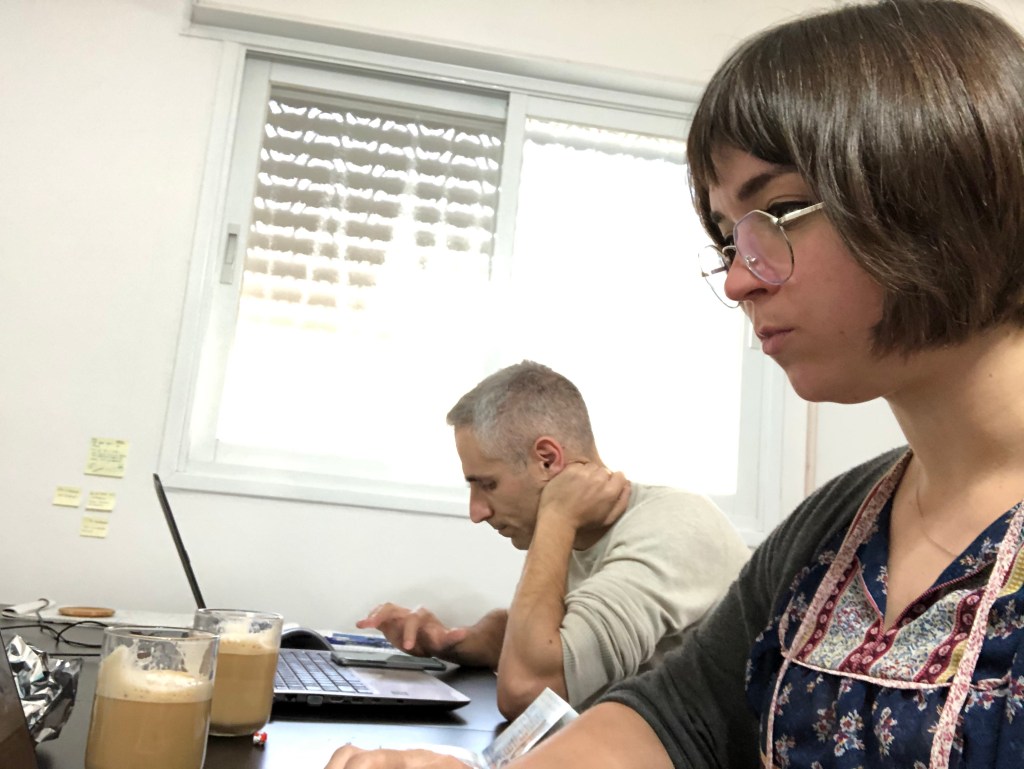
Google came first, of course. Mostly so we could learn the right questions to ask:
“When’s the best time to hike Kilimanjaro?“
“How much does it cost?“
“What do we need to pack?“
“How many trails are there? What are the differences between them?“
“Not everyone makes it to the summit – how do we increase our chances of summiting?“
“What travel company should we hire?“
“What kind of physical shape do we need to be in?“
“Can we shave on the mountain?”
(Don’t look at me! That last one is Ido – he can’t stand more than 3 days of beard stubble)
Looking back, thank GOD we had so much time to prepare. Just planning a trip like this is a monumental task.
Starting with the technical details was helpful and necessary – but then we started to crave more first-person accounts.
- Was a -15° comfort rating for a sleeping bag REALLY warm enough to sleep in?
- After hiking the mountain, what would you pack or do differently?
- We know summit night is “tough” – but what exactly does that REALLY mean?
- Did you, and your trail mates, manage to summit? In your opinion, why or why not?
- How did they prepare for the experience? (Mental, physical, supplies, etc.)
So the research shifted and became more personal and story-centric, and we mined encouragement and nuggets of wisdom from the narratives of pervious hikers. Let’s thank God again for Amazon ebooks and Audible audiobooks.
By the way, our three favorite Kilimanjaro books were:
- Kissing Kilimanjaro by Daniel Dorr (our favorite by far! ebook and audiobook versions available)
- Kilimanjaro Diaries by Eva Melusine Thieme (ebook and audiobook versions available)
- How To Mount Kilimanjaro: A Mostly Serious Guide to Climbing Africa’s Highest Mountain by Jim Hodgson (only available as ebook)
And our two favorite first person documentaries about Kilimanjaro on YouTube were:
- Climbing Mt. Kilimanjaro via Lemosho Route, Tanzania (Documentary in 4k) by Backpacker Steve
- MOST Successful Route on Kilimanjaro | Northern Circuit Route: Part 1 and Part 2 by Waypoint of View
Budget
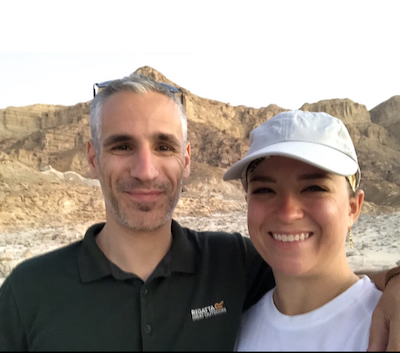
Another good part of starting so early is that we had time to save up and build a budgeting plan.
How much does a hike like this cost? (Hint: It ain’t cheap) And how much do we need to save up every month to get there in time? And where will that money come from between the two of us?
This actually was a great motivator in my own business – since I’m self-employed, I have more control over how much money I make (with some creativity and hard work).
So, to my surprise, our mountain goal actually propelled my work, and new scary things that I had been procrastinating on – like hiring subcontract writers, and creating lead magnet templates for my online store – suddenly became much more important to finish. It mattered more, when it meant being able to climb the mountain.
Also, a travel budget is definitely a place where Ido SHINES.
I mean, how many accountants do you know that are ALSO experienced world-travelers? That’s gotta be a short list, right?
Anyways, this meant he knew both how to create a good budget AND what we would need to buy, such as:
- Travel insurance with Covid coverage
- Visas for entry into Tanzania
- Local SIM cards for our phones when we arrived
- Estimated total cost of trek-specific supplies
- Estimated local costs of extra lodging and food (with some light online research)
Not only that, but he had the good sense to create a couple possible budgets.
If we save up X amount? Then we can climb the mountain.
But if we save up X amount PLUS Y?? Then we can climb the mountain AND do a safari!
(P.S. We did the math – and at least $500 on this trip alone is just for Covid-related expenses. Sheesh.)
Physical

If you met Ido on the street, you wouldn’t realize how analytical he is as a person. Cheerful and gregarious, it’s more like meeting a golden retriever puppy than an analyst.
But as an accountant and one of the best backgammon players in the world, he has a head for numbers I can’t even fathom. And, couple that with his natural love for fitness, it makes him one hell of a personal trainer.
So he LOVED creating physical training plans 4 days a week to push us and strengthen us specifically for the activities on the mountain. Both of us can now run for an hour straight; last week I did a 2-hour strength-training exercise with a total of 300 burpees.
Occasionally, I’d had to draw a line (“No, I will NOT get up at 4am and walk 10km in the morning before work for a whole week”), but for the most part I knew he was better at me than this and followed his lead, if a little grudgingly sometimes. I’m looking forward to seeing it pay off.
Another important thing I did on my own was some long-overdue physiotherapy.
I knew it was something I’d have to do as soon as we set the mountain goal.
For my 30th birthday back in 2017, I had traveled alone to California as a present to myself. I also got a little reckless on some wet boulders under a waterfall and nearly broke my right ankle.
This ankle has been a problem ever since, and at the beginning of this year, walking was painful, and I was developing other physical problems and pains on the right side of my body, too. If I was going to hike a mountain, I couldn’t keep ignoring it.
With a little research, I tracked down a physiotherapist, went for a couple of sessions, and put in the work. Now I can walk without pain, the problems on the right side of my body diminished significantly, and now I only have the occasional twinge in my right ankle.
(Again, just another instance of the mountain goal upleveling the rest of my life.)
Mental
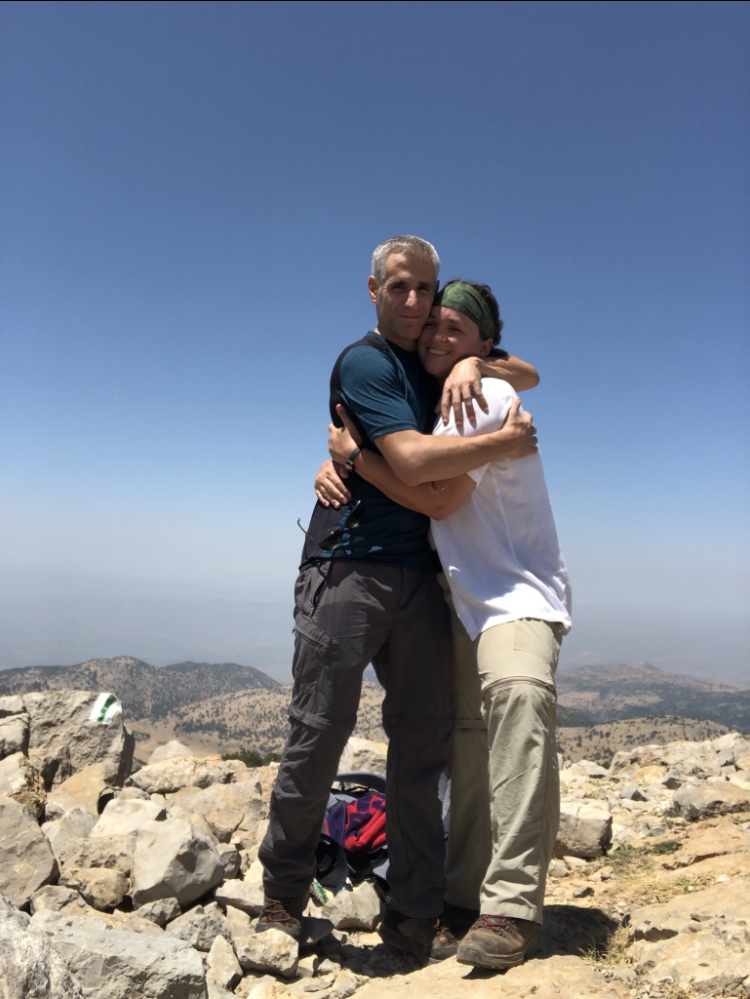
But physical training is just a piece of the preparation.
Equally – if not more – important is the mental training. Especially when it comes to making it to the summit.
Our physical training was so hard, it actually turned into mental training. That was 100% on purpose, and part of Ido’s plan.
It was also one of the nuggets we mined from our Kilimanjaro reading: your training needs to include something SO hard that when you’re 75% done, you wanna die, but you keep pushing past it until the finish line.
So – we pushed.
No, we don’t have 6,000 meter peaks and freezing temperatures to practice for the summit.
But we do have mountains, and that beastly Middle East heat and sun, to test our will.
So, on a hot July day, we returned to the hardest mountain trail we knew – 3 hours straight up, no plateau. On a sunny August afternoon – easily 100 degrees – we found a set of outdoor stairs and ran sets in the full sun for an hour (with breaks in the shade). A couple of weeks ago we intentionally did a long hard workout without any music. Anything to test us both physically and mentally.
And this was all on top of us continuing to work full-time at our jobs.
I used to cry in the early workouts – I would always finish the routine no matter what, but there were usually tears and a lot of emotional recovery afterwards. The pushing HURT. I felt frustrated, inadequate, spent.
But, slowly, I started to notice improvements. The crying stopped. I became more matter-of-fact. My focused sharpened and deepened. I recovered faster, both physically and mentally, after a hard workout.
A couple of weeks ago, Ido and I had a conversation after another hard workout.
“You definitely could’ve gone another round,” he said.
I smiled. “I really could have. So what do you think? Think I can make it to the summit?”
“I’ll admit, at the beginning, I wasn’t sure,” he said. “But you are definitely much stronger mentally now than you were before. I definitely think you can do it.”
Supplies

Here’s the thing – I’ve never been a shop-till-ya-drop kinda gal.
When I go shopping, I actually have a 2-visit limit to the fitting room. And if I can’t find what I’m looking for in those two attempts, too bad.
So – when it came to the MASSIVE shopping list associated with the trip, I was more exhausted than excited about the shopping spree.
Another thing to know about Israel: there is not Amazon Prime here, and shipping is a hit-or-miss nightmare. We’re talking 4-6 weeks on delivery. Therefore, online shopping on a deadline really isn’t feasible.
So, three weeks before our trip, we spent a solid week going to +20 stores with a +100 item spreadsheet, trying on clothes and evaluating features in the most minute detail (“Ok, but is the opening of this water bottle wide ENOUGH? Because I read in this one article — “)
But, one evening and store at a time, we chipped through the list that we had so carefully assembled from the books we read, websites we found, and our tour company’s suggestions.
Looking at our half-packed bags now, I’m pleased with what we managed to find. Yes, we did go WAY past the expected budget, but we found everything we needed, including some helpful bonuses like fully-insulated camel drinking bags – both bag and tube protected – to hopefully avoid freezing on the long summit night.
There are a few more heavy winter items we’re planning to rent there as well, once we arrive.
And I won’t even get into all the required paperwork here.
But, long story short – we managed to buy all that needs buyin’
In the future, I promise to provide a list of everything we brought, and let you know what worked, and what didn’t.
(Sidenote: Hardest item to find? Thin silk liner socks to help protect against blisters. After 15 stores, we finally settled on some nice ones made with bamboo)
Wheels Up
And now, finally, almost unbelievably – the day of our flight has arrived.
There’s no lockdown, our Covid tests came back negative yesterday morning … there’s nothing left to do but finalize our packing and GO.
It’s gonna be a wild two weeks, and I can’t wait to share more of it with you.
Wish us luck – and I’ll keep ya posted.
 heatherboyer.net